
Why Visual Learning Works Better: The Science Behind Motion Graphics & Explainer Videos
As motion designers, we’ve seen how animation transforms dry information into engaging visual stories. This isn’t just a creative preference—it’s backed by cognitive science.
The Science of Visual Learning
The human brain is wired for visuals. According to Dual-Coding Theory, we process visual and verbal information through separate channels. When animation and narration are combined, both channels activate—leading to stronger memory retention.
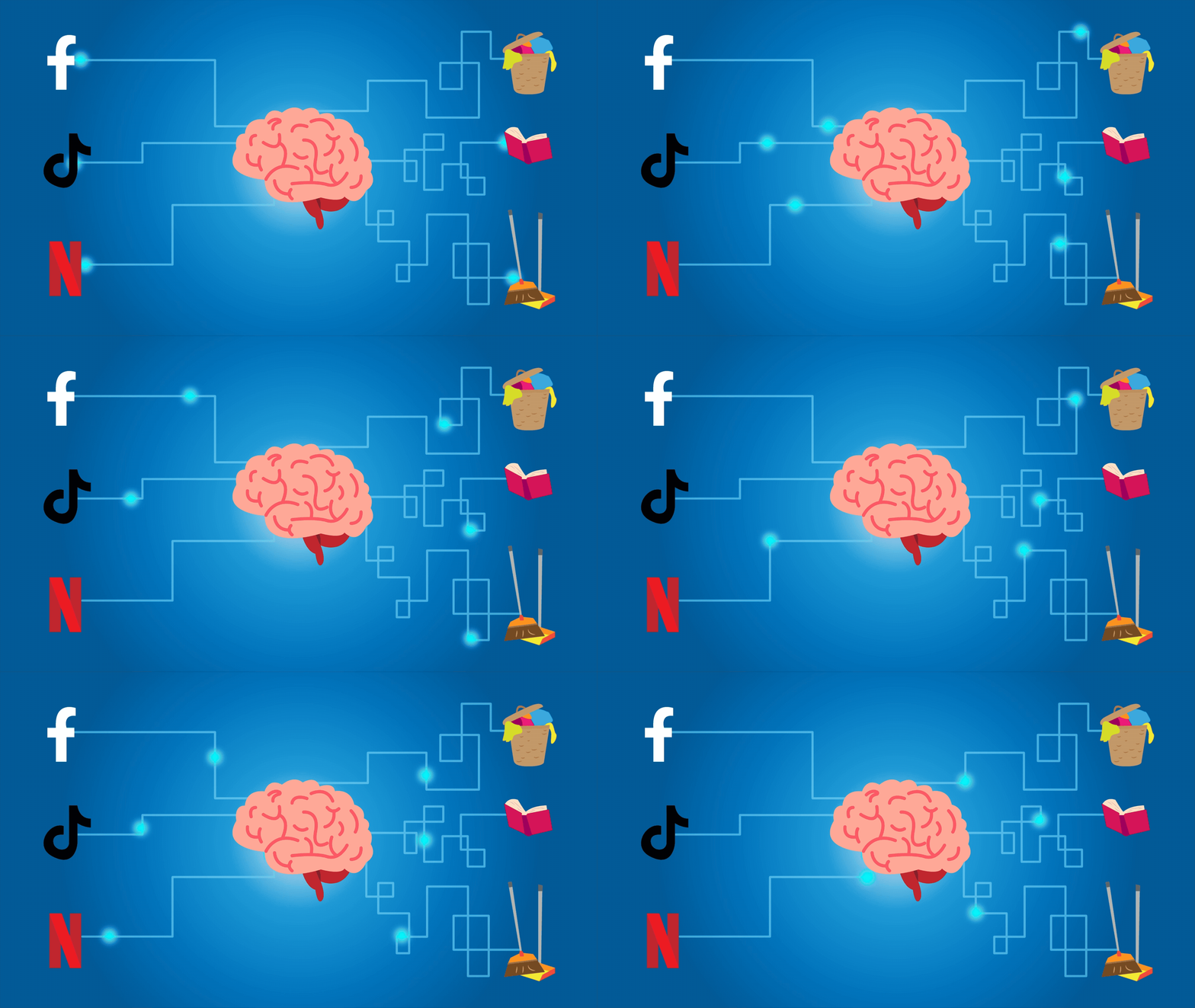
Research from the National Institutes of Health highlights that attention is essential for learning. Motion graphics naturally guide attention through movement and hierarchy, making it easier for viewers to absorb information.
Studies also show that animated visuals can improve recall by up to 65%. This is due to “memory anchors”—visual metaphors that help information stick. Similarly, research funded by the National Science Foundation found that learners using visuals demonstrate higher accuracy than those relying on text alone.
Why Motion Graphics Work So Well
Reducing Cognitive Load
Motion graphics simplify complex ideas by breaking them into digestible visual sequences, reducing cognitive overload. Instead of overwhelming viewers with dense text, they show concepts unfolding over time.
The Power of Visual Storytelling
They also leverage storytelling. People don’t remember bullet points—they remember stories. When animation is paired with narrative and emotion, retention improves significantly.
Synchronizing Audio and Visual
Finally, syncing visuals with audio reinforces learning across multiple senses, making content more engaging and easier to understand.

Real-World Impact
Across industries, motion graphics deliver measurable results. Companies using animated training content report higher user adoption and fewer support queries. In education, visual resources have been shown to significantly improve teaching effectiveness and depth of understanding.
From corporate onboarding and product training to healthcare education and marketing, motion design makes information clearer, faster to learn, and easier to remember.
Motion graphics and explainer videos aren’t just visually appealing—they align with how people naturally learn. When information is seen, heard, and experienced, it becomes far more impactful.
We create explainer videos that turn complex ideas into memorable visual experiences. Reach out to see how we can bring your message to life.
